Effectively Dealing with “Bad” Behaviour, Defiance and Disruption
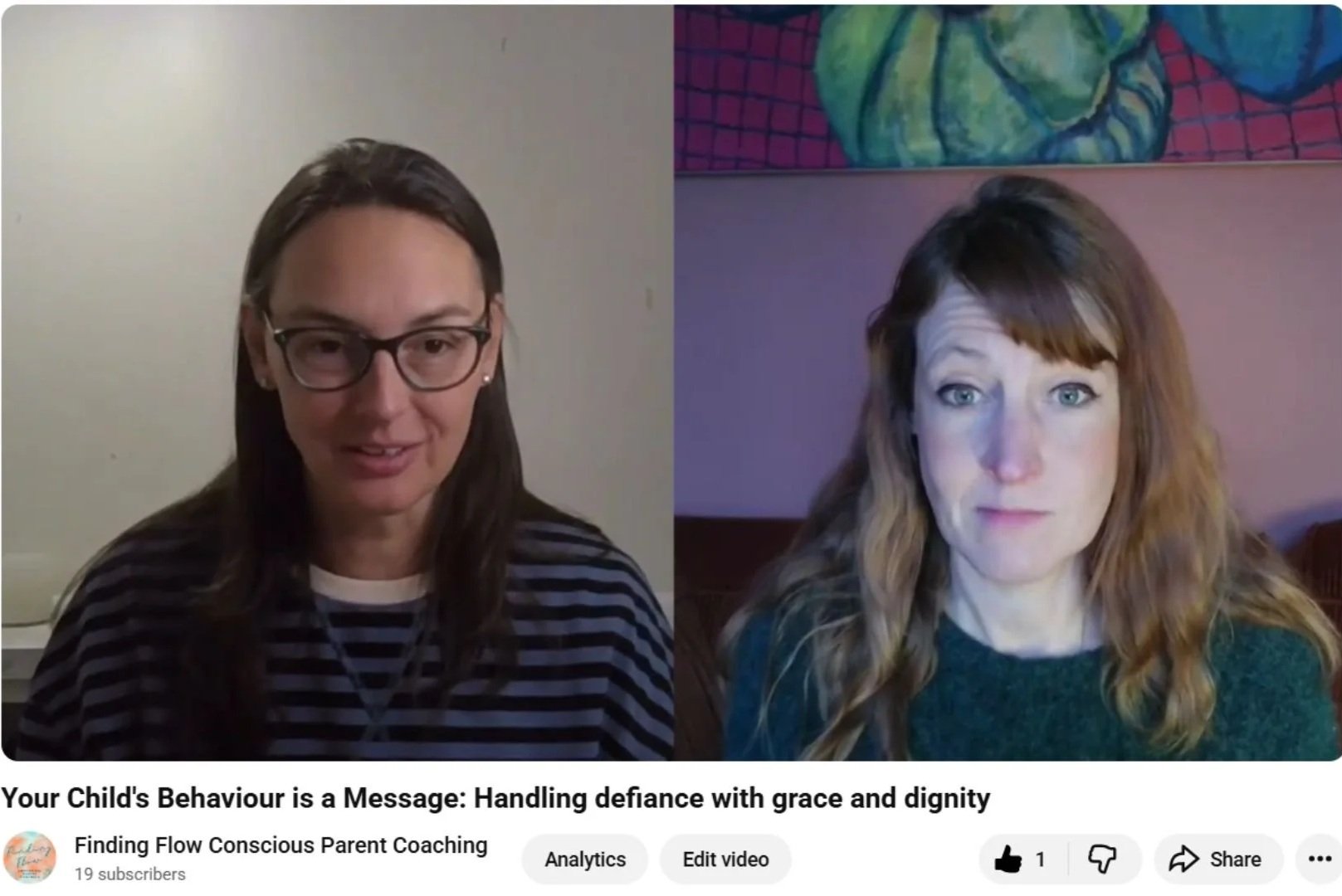
Watch/ listen to the full podcast episode
Navigating Disruption: A Parent’s Guide to Understanding Child Behavior
Parenting can feel like a rollercoaster — full of sharp turns, unexpected drops, and moments that leave you wondering what just happened. In a recent episode of the Finding Parenting Podcast, host Emily Hughes sits down with certified parent coach Kristin Schmoke to unpack a listener’s question about their eight-year-old son’s disruptive and defiant behavior. What unfolds is a thoughtful conversation about control, connection, and the deeper meaning behind challenging behavior.
Rethinking Control
The episode begins with a powerful reframe: when children act out, it often triggers a parent’s urge to regain control. But as Kristin explains, that need for control frequently arises when we ourselves feel overwhelmed or out of control.
The truth? Control is often an illusion.
When parents shift from trying to “manage” behavior to understanding it, everything changes. Instead of reacting with frustration, we can pause and ask: What’s really going on here? That perspective alone can soften tension and open the door to empathy.
Behavior Is Communication
One of the central themes of the discussion is this: behavior is a message.
Rather than labeling a child as defiant or difficult, Kristin encourages parents to get curious. Questions like, What is my child trying to tell me? or What need isn’t being met? create space for understanding.
This shift from judgment to curiosity helps transform power struggles into opportunities for connection. When children feel heard and emotionally supported, cooperation becomes much more possible.
Strengthening the Connection
Emily highlights an essential but often overlooked piece of the puzzle — connection. When parents focus solely on correcting behavior, the relational bond can unintentionally weaken. Yet connection is the very foundation that makes guidance effective.
Taking time to assess the strength of your emotional connection with your child can be transformative. Small moments of presence, shared laughter, and genuine listening can dramatically improve behavioral dynamics. Connection is not a reward for good behavior; it’s the pathway to it.
“Finding the Jewel”
One of the most practical tools shared in the episode is a concept called “Finding the Jewel.” This approach invites parents to look for the strength hidden within challenging behaviors.
A child who argues may actually be demonstrating strong self-advocacy. A child who resists may have a powerful sense of independence. When we intentionally look for these positive traits, we begin to see our children more generously — and respond more constructively.
Reframing behavior in this way doesn’t excuse it. Instead, it helps parents guide their child’s strengths in healthier directions.
The Ripple Effect of Regulation
Kristin also discusses emotional regulation and its ripple effect within the family. Children co-regulate with the adults around them. When parents are dysregulated — stressed, reactive, or overwhelmed — children often mirror that energy.
But the reverse is also true. When adults model calm, grounded responses, children feel safer and more secure. Over time, this consistent modeling builds emotional resilience and cooperation, not just at home but in school and other environments as well.
The Takeaway
Parenting is challenging — but it doesn’t have to feel like a constant battle. By shifting from control to connection, from judgment to curiosity, and from correction to understanding, parents can navigate disruptive behavior with greater confidence and compassion.
Every behavior carries a message. When we slow down enough to listen, we often discover that beneath disruption lies a child asking to be understood.
Listen or Watch to the Podcast Here
https://podcasts.apple.com/us/podcast/finding-flow-parenting/id1877636146
https://open.spotify.com/show/5TB8GOX0ECxJmaSX8YOoJ2
https://youtu.be/ikcnIKo3jD0?si=MywiYDZAv2fqhUKp